


- 66
The Preamble to the Tailgating Constitution
We the people, in order to form a more perfect tailgate, establish fandom, prevent game day disturbances, provide properly cooked brats, promote comfortable seating, and secure the blessings of our favorite team's ticket office for ourselves and our posterity, do ordain and establish this Constitution for tailgaters all over the world.



- 66
Don't be a failgater.
Before we can hope to set forth any laws, bylaws or standards and practices regarding tailgating, we must first define what tailgating actually is. The origin of what we call the tailgate party is widely believed by historians to date back as far as 85 A.D., when Romans would gather around horse-drawn carts outside of the Colosseum before gladiator fights.
The modern tailgate party became popular with the proliferation of modern automobiles and the passing of the National Highway Act of 1956. And while the root word, tailgate, denotes the door or gate behind a truck, SUV or similar vehicle that is frequently bottom-hinged for ease of loading and unloading cargo, a tailgate party is not relegated to these confines.
The word itself, tailgate, is commonly used in two ways: in reference to the aforementioned bottom-hinged door or as an abbreviated version of the phrase, tailgate party. There is, however, another form of the word that's gaining in popularity: TLG8, the premier source for buying the gear you need for the teams you love. With TLG8, serious tailgaters can finally get officially licensed team lawn chairs instead of settling for team colors and pathetic intentionally misspelled team names.
Example: Do you use TLG8 gear at your tailgate, or do I have to find a new friend?
Let it be known that for an official tailgate party to take place, only two things are needed: true sports fans and a sporting event (regardless of whether you are or are not on location for said event).

- 66
Don't be a failgater.
As the traditional sense of tailgating refers to the presence of numerous vehicles gathering to celebrate a sporting event, vehicle etiquette is of the utmost importance. Failure to do so will earn a group or individual the title of failgater(s). Some important things to remember to avoid failgating are:
The parking lot is not a racetrack.
In the world of tailgating, the parking lot is sacred. Driving fast is inexcusable and there is no reason for it. In a hurry to snag an amazing parking spot? Wake up earlier, you fair-weather fan. In a hurry to leave? Oh, you must have better things to do than talk about sports, hang out with like-minded friends and eat whatever you want. Sure. Remember, a true tailgater doesn't endanger other tailgaters.1
Procure premium parking.
They say the early bird gets the worm. To some, this makes waking up early seem like a necessity. This is a common misconception. Remember, fan is just short for fanatic. Well, fanaticism doesn't sleep and neither should you. Procure your preferred parking spot in the middle of the night while anxiously pouring over injury reports and lineups in anticipation. Let the fair-weather fans worry about setting alarms and "healthy" sleep. Then let them worry about horrible parking spots.
Your vehicle says a lot about you.
While not quite frowned upon, unoriginal removable decorations such as window flags are not encouraged. Even though window flags can be found on true fans' cars, they are most frequently found on "fans'" cars after their team has won a title or made the playoffs. When deciding what to put on your vehicle, here's a rule of thumb: bandwagons don't have permanent decorations.

- 66
Not all tailgates are created equally.
Upon procuring a premium location for a tailgate, the next order of business is making that spot the best. Other tailgaters will want your location, and their locations will want to be your location. Over the years, this has been accomplished in a variety of ways:
One of the benefits of a traditional tailgate is that the tailgate itself is a seat. However, as tailgate parties have grown and become more and more sophisticated, the need for more sophisticated seating has also become an issue. The most efficient solution has been the camping chair, due to its comfort, portability and customizability which allows you to display your athletic allegiance. Some models even allow you to store a six-pack in a built-in cooler. Metal folding chairs are also viable, although they frequently rely on seat cushions for comfort. In the event of a seating shortage, and only in the event of a seating short age, coolers may be sat on as well.
One of the surest signs of a failgater is that bright red glow the day after a game. This is because, unlike true tailgaters, fail- gaters usually lack the experience and mental wherewithal to prepare for prolonged periods of revelry. This results in sunburns, pain and sometimes, bitterness. Besides, team-branded canopies are basically pom poms that protect you from the sun.
The grill is the centerpiece of the tailgate. It should, however, not be located in the exact center, as that would leave it open to scavengers on all sides. The type of grill you use is completely dependent on what you plan to cook (see also, Protein Prepara tion). If you plan on feeding a crowd, the home team and/or smoking large pieces of meat, a horizontal smoker on its own trailer is handy. For the tailgater seeking the ultimate in portability or working with a limited space, a smaller propane grill is highly recommended. As for the charcoal vs. gas debate, irrefutable proof of dominance must be established before any legislation can be passed.

- 66
Cold beverages fuel heated rivalries.
Very few things can turn a tailgate into a failgate like warm or insufficient beverages. Luckily, this is easily remedied.
While their exact origin is up for debate, one thing is certain: there are a lot of different types of coolers. The most common one at most tailgates is the Linebacker. This one is exactly what it sounds like: big, tough and reliable. It can even transform into an extra seat with the addition of a seat cushion. Another common refrigeration device is the Softy. These soft-sided coolers are extremely portable, very awesome and come in a range of sizes. So, whether you're keeping your own stash of drinks cold and safe from mooches or need to keep 40 quarts of potato salad cold, you're covered.
Koozies are the ultimate luxury in drink maintenance. Invented by the great American renaissance man, Thaddeus Buckhalter, these neoprene lifesavers are designed to fit around cans and bottles alike. They serve the dual purpose of both keeping your drink cold while, at the same time, preventing your hand from getting cold. Their availability and affordability makes them a staple at any tailgate.

- 66
What's Your Beef?
Tailgate parties have been the chosen battlegrounds for many arguments throughout history. College vs. professional basketball. The west coast offense vs. a run-first offense. These all pale in comparison to the debates that rage over flaming coals every weekend.
With such a wide variety of encased meats to choose from, picking the one for you can be a tough decision. For those on a budget, the standard hot dog is king. But if you live in a Midwestern state, like Wisconsin, odds are you'll have bratwurst. This is a classic option, as it packs much more flavor than the typical beef frank while its cylindrical nature makes it more portable and negates the need for a plate. Braising one in your beverage of choice is also a popular and highly recommended option.
Popularized in the South, beer can chicken is always an attention-getter at a tailgate party. It's also extremely easy. Just insert a half-full (or half-empty, if you're a pessimist) can of your favorite beer up the chicken's orifice (see fig. a) and cook slowly. Does it taste any better than just grilling it? That depends. Does it make you look way cooler than some guy grilling a plain weenie over his wimpy flame? Without a doubt.
Note that any "tailgater" who tells you that you need a special device to do this is really a failgater trying to buy his status as a tailgater. Do not trust this person and report them to the authorities immediately.
The only consistency among barbecue aficionados is the motto, "low and slow." This refers to the recommended method of cooking a piece of meat at a low temperature for a long period of time. It's a good thing they agree on that because any ensu ing argument isn't going to be short. In Texas, brisket is king. The Carolinas have their pulled pork. Kansas City, its sweet and tangy sauce. And Memphis owns the dry rub category. Regardless of their preparation, the long cooking times mean that true pitmasters have to arrive earlier than most people. This makes the vast majority exempt from falling into the failgater category.

- 66
Condiments are a privilege, not a right.
As the application of condiments is solely up to the person eating, this Article has no bearing on the host of the tailgate until he crosses the line separating parking lot chef and gourmand.
Continuing, when it comes time to finally eat, many people like to apply various accoutrements to their entrée to bring about its full flavor potential. Here are some of the more popular application methods:
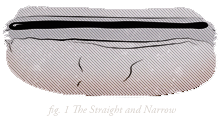
The Straight and Narrow
Making signs to get on TV can be a fun exercise for the whole family. When doing this, the most important things are to be relevant—as most TV cameramen aren't, and shouldn't be, as big of fans as you—and to find a way to use the station's letters to make an anagram. Here's an example (that our lawyers won't get mad at)
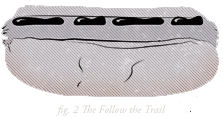
The Follow the Trail
(a.k.a. Cut on the Dotted Line)
This is a variation of the Straight and Narrow that utilizes less condiment, which, in turn, allows the flavor of the vessel to shine through while simultaneously making you look like a third-grader using glue.
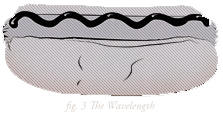 The Wavelength(a.k.a. The Spelling Error)While not technically correct, as it is comprised of multiple wavelengths, it is one of the more popular application methods. The waved line approach allows more condiment to be used, which comes in handy with overcooked meat. Using the Wavelength with more than one condiment is frowned upon, as it tends to overpower the vessel and make the bread, for lack of a better word, mushy.
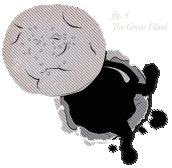
The Straight and Narrow
(a.k.a. The Broken Cap)
Unless there was an accident with the bottle, this application method automatically qualifies the applicator as a failgater.

The Artist
(a.k.a. The Child at Heart)
This method is strictly prohibited for anyone over 12 years of age.
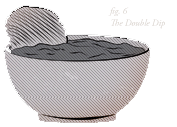
The Double Dip
(a.k.a. The Find a New Ride Home)
Double Dipping is extremely rude and, not to mention, dangerous. You see that sweaty shirtless guy coughing over there? Yeah, he's a double dipper, too.

- 66
Your trash talk stinks.
Every day, you hear sportscasters talk about how the game (any game) is like a chess match. After all, strategy is important in both. But that's where the similarities end. Chess lacks the 6'6" shooting guards, 6'5" 270 lb. running backs and 95 mph fastballs present in sports. And, more importantly, it lacks the trash talk.
Talking trash, or "smack," as some call it, is a time-honored tradition in sports that also carries over to the tailgating arena. It is especially prevalent in tailgate parties that possess fans of both teams (see, Beyond the Tailgate). And while fun, it should also be practiced responsibly. There are several basic guidelines that should be followed in any trash talking session:
As trash talking escalates, the tendency to be mean instead of funny increases. This is a huge mistake because (a) it automatically kills any fun present and (b) usually only results in more mean comments. Note that these aren't mean jokes anymore. Jokes are funny.
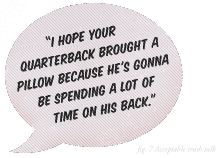
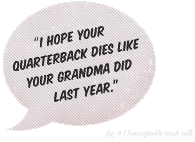
This can't be repeated enough. Nobody likes an unfunny trash talker.
Sure, everyone loves the joke that relates to something they saw in the news. But this doesn't mean that you should avoid a jab about the opponent's team in the 1970's. These are not only funny and catch people off guard, but they're a great way of testing your opponent's level of fandom.

- 66
Your "Hi mom!" poster is embarrassing to your mom.
While signs may not be displayed or showed off often during a tailgating party, they can be constructed there at the last minute. All you need is something to write on, whether it's a poster, banner, sheet of plywood or your bare chest (see, Personal Decoration) and something to write with like a marker, crayon or even barbecue sauce. Signs only serve two purposes at sporting events: getting in the opposing team's head and getting on TV.
When your sole reason for making a sign is to get in the other team's head, focus on being distracting. In basketball, this can be done with crazy colors and lots of movement behind the basket. This is especially effective during free throws. Another method is to say things that cut them to their core. To do this, you need to do a lot of research on every member of the team, including the coach. Remember, the rules from On Decorum and Provocation still apply, so while you do want to get in their heads, it's best not to do so at the expense of not being funny.
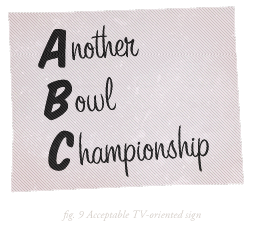
Making signs to get on TV can be a fun exercise for the whole family. When doing this, the most important things are to be relevant—as most TV cameramen aren't, and shouldn't be, as big of fans as you—and to find a way to use the station's letters to make an anagram. Here's an example (that our lawyers won't get mad at)

- 66
Body hair is a canvas, too.
The act of wearing your team's memorabilia to a tailgate is as old as tailgating itself. It's rumored that during the gladiator fights in Ancient Rome, spectators would wear armor that resembled that of their favorite gladiator. Although with the gladiators' short life expectancies back then, it wasn't nearly as widespread as it is nowadays. Today, fans young and old display their fandom in a variety of different ways:
Second only to the T-shirt, the jersey is probably the most used method of personal decoration for spectators of professional sports today. Exceptions include swimming, pole vaulting, gymnastics and figure skating.
As an adult, costumes are usually only acceptable on Halloween. In the sports world, however, this is the norm. Oh, the guy asking you for a burger is wearing spiked armor and has a black-and-white-colored Mohawk? How does he want it cooked? Pass the mustard. No big deal.
Painting your chest or entire body in the colors of your favorite team shows dedication. Painting your chest or entire body in the colors of your favorite team at a Green Bay game in December shows borderline unhealthy fanaticism, and is encouraged.
Face painting is not allowed on any male over the age of 12. Enough said.

- 66
You never stop being a fan.
As a true fan, your fanaticism shall extend far beyond the reaches of any tailgate, parking lot or playoff season. You are expected to keep up-to-date with any important news about your team should you meet another fan by chance. These chance encounters are considered tailgates and should be treated accordingly.
However, there is one sticky situation that many fans find themselves in: the house divided.
In a divided household, two partners are engaged in a relationship that exists outside of their fandom and team loyalties. This is highly frowned upon by some fans, but is widespread enough now to be socially acceptable. Should you find yourself in this situation, remember: they're fans, too. All team memorabilia should be kept as even as possible to keep hostilities to a minimum. Should a child be born into a divided household, the bigger fan (in knowledge or physical stature) gets to choose said child's clothing to any tailgates or games it attends. This can be agreed upon with a truce or by a sports quiz issued by a neutral third party to test fanaticism levels.

- 66
For tailgaters. By tailgaters.
This Constitution was penned with the sole purpose of preserving the time-honored tradition of tailgating, be it through providing guidelines to improve discourse between opponents, helpful instruction regarding beverage refrigeration or tips on failgater recognition and prevention.
But, like the games we love so much, tailgating is constantly evolving. For that reason, the Tailgating Constitution is a living document, representative of the smorgasbord of unique fans it serves. If you, the reader/fan, feel as if you are not being adequately represented, take a stand. Let us know what you would like to see amended. If your proposal is ratified by three fifths of the governing body, it will be passed on to our scribes to be written in.

- 66
At this tailgate,
I do hereby pledge to support not only my team, but tailgaters everywhere, regardless of race, creed or team affiliation, by not participating in any failgater-worthy activities.
Amen